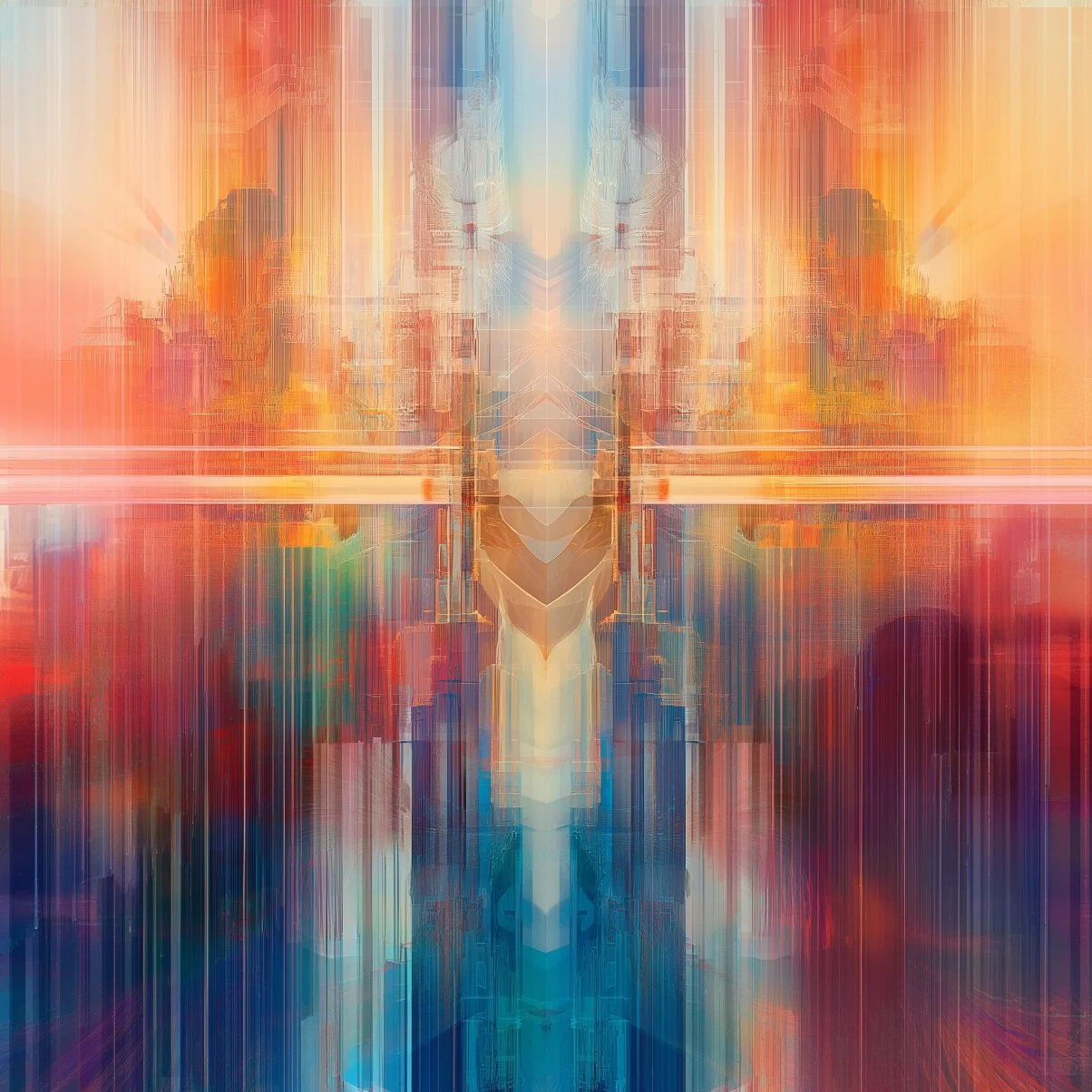
Thought Experiment 4
This NFT collection stems from an idea that a bridge can be created between art and science. The collection is comprised of 7 unique AI generated NFT images that are an abstract version of the clinical literature. The focus of this collection is around the disease Acute Kidney Injury.
LA.TE4.KID.D1 - Resilient Currents
Resilient Currents, delves into the intricate balance of vulnerability and strength within the human body when confronted with severe illness. Through turbulent, layered waves of dark blues, greys, and hints of red, the artwork symbolizes the physiological storms unleashed by sepsis—a condition where infection escalates to systemic levels, threatening vital functions. Soft-edged shadows representing acute kidney injury emerge in dark hues along the upper sections, underscoring the critical risk factors associated with organ failure.
Interwoven lines and metallic textures introduce elements of intervention, hinting at invasive treatments like ventilation and vasopressor support, necessary yet delicate tools in restoring balance. Soft glows surround certain shapes, portraying moments of resilience and hope amid intense strain. The piece captures the fragility and adaptability of the body, reflecting both the physiological challenges and the subtle persistence of life in the face of systemic disruption.
LA_by_Koba
Original artwork by Ross Prior, inspired by and derived from Liu, J., Xie, H., Ye, Z., Li, F., & Wang, L. (2020). Rates, predictors, and mortality of sepsis-associated acute kidney injury: A systematic review and meta-analysis. BMC Nephrology, 21, Article 318. https://doi.org/10.1186/s12882-020-01974-8. This article is licensed under a Creative Commons Attribution 4.0 International License (CC BY 4.0), accessible at https://creativecommons.org/licenses/by/4.0/. All creative elements and visual interpretations are the original work of Ross Prior, reflecting a reinterpretation of the findings from Liu et al. (2020). The authors and publisher of the original article are not affiliated with or endorsing this artwork.

LA.TE4.KID.D2 - Interwoven Paths: From Damage to Renewal
"Interwoven Paths: From Damage to Renewal" captures the intricate and dynamic journey of resilience and healing through a striking interplay of geometric forms, vibrant colors, and layered textures. At its core, the composition features interlocking circles and squares, symbolizing the interconnected biological pathways that contribute to ischemic acute kidney injury (AKI). These shapes radiate outward in fluid motion, reflecting the cascading effects of oxidative stress and inflammation, while simultaneously representing the restorative energy of plant-based therapies.
Bold strokes of color transition from deep, heavy hues to light, vibrant gradients, symbolizing the progression from injury to recovery. Layers of texture evoke the organic wear of time and the resilience of urban environments, grounding the piece in both natural and clinical realities. Dynamic patterns and harmonious color relationships create a rhythm of perpetual motion, embodying the balance between damage and repair. Minimalist accents provide clarity amidst complexity, making the artwork a compelling visual narrative of renewal and interconnectedness.
LA_by_Koba
Original artwork by Ross Prior, inspired by and derived from Ali, A., Sampaio, T. L., Khan, H., Jeandet, P., Akkol, E. K., Bahadar, H., & Martins, A. M. C. (2022). Plants with therapeutic potential for ischemic acute kidney injury: A systematic review. Evidence-Based Complementary and Alternative Medicine, 2022, Article 6807700. https://doi.org/10.1155/2022/6807700. This article is licensed under a Creative Commons Attribution 4.0 International License (CC BY 4.0), accessible at https://creativecommons.org/licenses/by/4.0/. All creative elements and visual interpretations are the original work of Ross Prior, reflecting a reinterpretation of the findings from Ali et al. (2022). The authors and publisher of the original article are not affiliated with or endorsing this artwork.

LA.TE4.KID.D3 - Early Signals of Change: A Dynamic Harmony of Detection and Intervention
"Early Signals of Change: A Dynamic Harmony of Detection and Intervention" captures the essence of acute kidney injury (AKI) detection through the abstract interplay of geometry, color, and texture. The composition harmonizes geometric forms — circles, squares, and interlocking patterns — representing the structured nature of KIM-1 as an early biomarker. These elements symbolize the diagnostic performance of uKIM-1, which detects kidney injury before traditional markers can.
Fluid, bold strokes introduce movement, evoking the spontaneity of the energy associated with the rising concentration of uKIM-1 in the urine. Vibrant hues resonate with dynamic motifs, signifying the vibrancy and dynamic flow of kidney function. The rhythmic color relationships evoke perpetual movement, while textured layers reflect the variability in diagnostic outcomes across patient populations.
The balance of color fields and sharp lines underscores the clinical precision of KIM-1’s role in AKI detection, signaling a profound, emotional journey toward early intervention. This abstract work blends symbolism, movement, and structure, capturing the delicate balance between diagnosis, health, and intervention in kidney care.
LA_by_Koba
Original artwork by Ross Prior, inspired by and derived from Geng, J., Qiu, Y., Qin, Z., & Su, B. (2021). The value of kidney injury molecule 1 in predicting acute kidney injury in adult patients: A systematic review and Bayesian meta-analysis. Journal of Translational Medicine, 19, 105. https://doi.org/10.1186/s12967-021-02776-8. This article is licensed under a Creative Commons Attribution 4.0 International License (CC BY 4.0), accessible at https://creativecommons.org/licenses/by/4.0/. All creative elements and visual interpretations are the original work of Ross Prior, reflecting a reinterpretation of the findings from Geng et al. (2021). The authors and publisher of the original article are not affiliated with or endorsing this artwork.

LA.TE4.KID.D4 - Symphony of Fragmented Vitality
"Symphony of Fragmented Vitality" is an abstract visual narrative that bridges the intricate realms of clinical intervention and artistic expression. The piece evokes the tumultuous process of mechanical clot removal used in treating deep venous thrombosis, drawing upon vivid hues and dynamic forms to reflect the rapid fragmentation of obstructive masses. Bold, intersecting streams of deep blues and fiery reds capture the forceful intervention that shatters the clot, while delicate, swirling currents represent the release of free hemoglobin—a by-product that carries the risk of acute kidney injury. The layered composition mirrors clinical observations, illustrating how high-pressure interventions can yield both therapeutic success and potential complications. Soft halos intermingling with sharp, crystalline fragments symbolise the delicate balance between the destructive nature of the procedure and the hope of recovery through vigilant monitoring and management. This evocative piece not only celebrates innovative vascular therapies but also honours the resilience of the human body.
LA_by_Koba
Original artwork by Ross Prior, inspired by and derived from Al‐Mannai, N.E.A.H., Sibira, D., Alsuwaidi, H., Elmagdoub, A., Habas, E., & Alfitori, G. (2024). Acute kidney injury requiring dialysis after endovascular intervention for acute deep venous thrombosis: A case report and literature review. Clinical Case Reports, 12, e9263. https://doi.org/10.1002/ccr3.9263. This article is licensed under a Creative Commons Attribution 4.0 International License (CC BY 4.0), accessible at https://creativecommons.org/licenses/by/4.0/. All creative elements and visual interpretations are the original work of Ross Prior, reflecting a reinterpretation of the findings from Al‐Mannai et al. (2024). The authors and publisher of the original article are not affiliated with or endorsing this artwork.
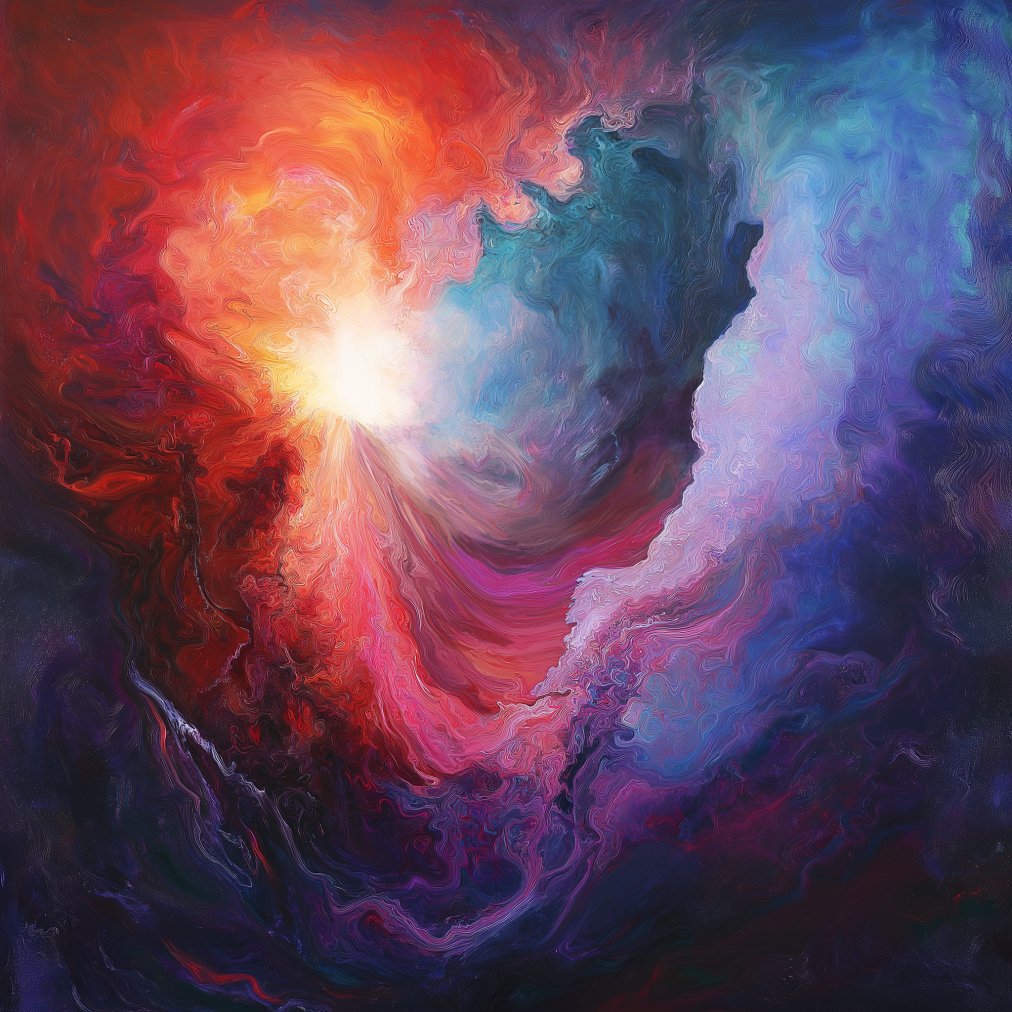
LA.TE4.KID.D5 - Threshold of Silence: Between Pulse and Production
Threshold of Silence: Between Pulse and Prediction is a layered abstract work that reflects the clinical complexities and diagnostic delays in acute kidney injury (AKI) management within intensive care units. Drawing on the duality found in the literature—between established yet limited biomarkers and the promise of data-driven prediction models—the composition juxtaposes chaotic organic textures with structured geometric forms. The fragmented kidney silhouette at the center echoes the physiological breakdown in renal function, while spirals and broken strokes depict the time-lag and imprecision of serum creatinine and urine output measurements. Emerging shapes representing variables like sepsis and hemodynamic shifts suggest the dynamic interplay captured in clinical prediction models. The image’s movement and tonal shifts visually express the clinical transition from reactive to proactive care. The faint golden glow hints at the transformative potential of early detection, symbolizing the article’s central call for validated, impactful predictive tools to shift the paradigm of AKI diagnosis and intervention.
LA_by_Koba
Original artwork by Ross Prior, inspired by and derived from Huang, C.-Y., Grandas, F.G., Flechet, M., & Meyfroidt, G. (2020). Clinical prediction models for acute kidney injury in the intensive care unit: a systematic review. Revista Brasileira de Terapia Intensiva, 32(1), 123–132. https://doi.org/10.5935/0103-507X.20200018. This article is licensed under a Creative Commons Attribution 4.0 International License (CC BY 4.0), accessible at https://creativecommons.org/licenses/by/4.0/. All creative elements and visual interpretations are the original work of Ross Prior, reflecting a conceptual reinterpretation of the clinical themes, limitations, and predictive advancements discussed in Huang et al. (2020). The authors and publisher of the original article are not affiliated with or endorsing this artwork.
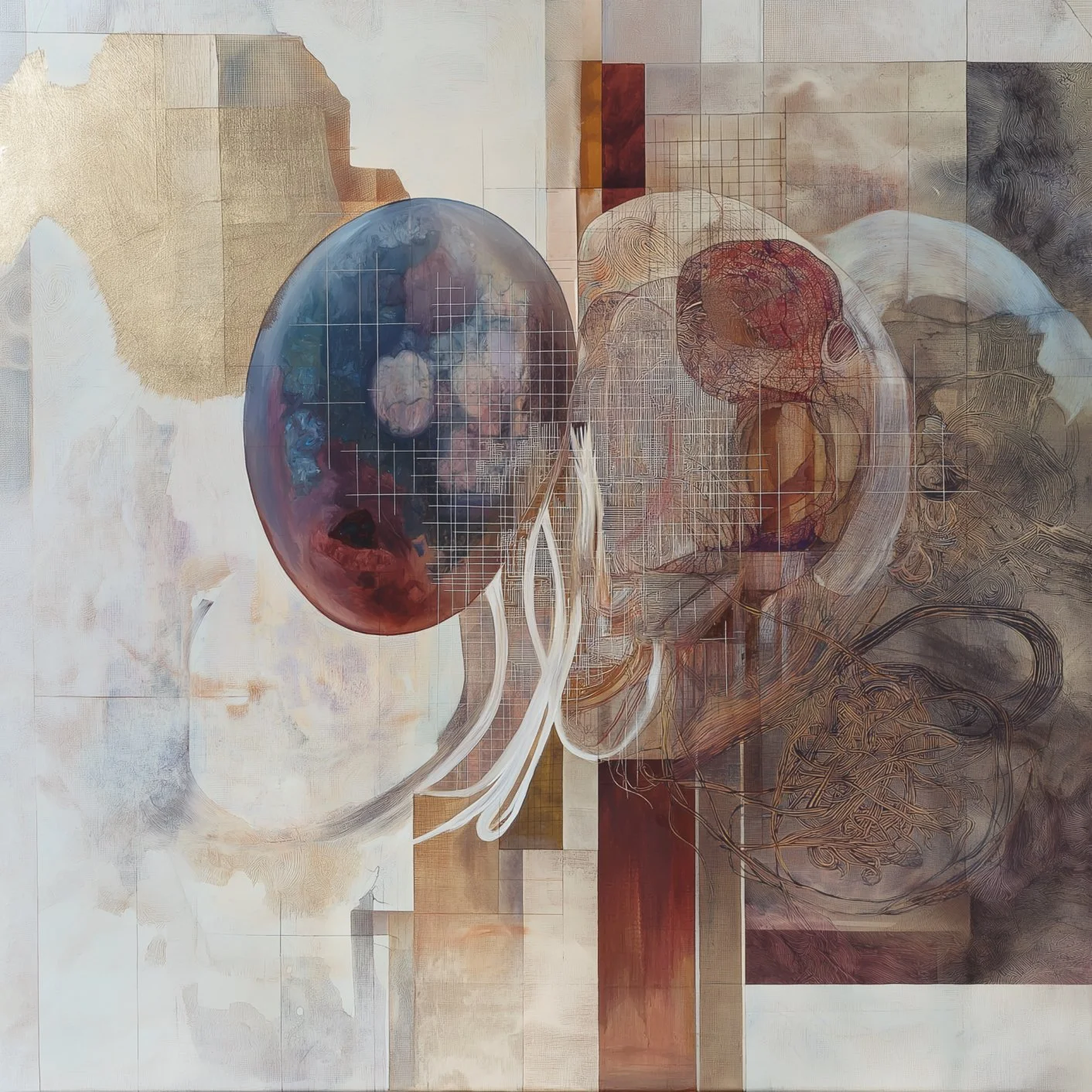
LA.TE4.KID.D6 - Preceding the Silent Decline
In this abstract composition, layered tones and rigid geometric structures dominate the foreground, representing the slow and imprecise tools historically used to diagnose acute kidney injury—methods like serum creatinine and urine output that rise only after damage has taken root. These forms feel static, almost reluctant, holding the composition in a suspended state of waiting. Threaded through this rigidity, ink-like strokes surge and meander—organic, fluid, and erratic—symbolizing the body’s early physiological distress signals that go unnoticed beneath the surface. Their diffusion into soft, translucent stains evokes a quiet unraveling, an unseen shift beneath clinical thresholds.
Toward the center, fragments of color converge into textured, mosaic-like formations. These densely packed clusters suggest the growing presence and promise of novel biomarkers—NGAL, TIMP-2 × IGFBP-7—emerging from biological noise with increasing clarity. Biomorphic shapes hover and dissolve across the piece, alluding to stressed cellular processes, while ambient washes of color swell and recede, hinting at fluctuating clinical states and the ephemeral window for intervention.
The artwork balances control and intuition, capturing a fragile moment where diagnostic inertia gives way to meaningful insight. It reflects the tension between knowing and not knowing, and the hope that, through layered understanding, we may learn to see before damage fully arrives.
LA_by_Koba
Original artwork by Ross Prior, inspired by and derived from Pan, H., Wang, X., Feng, Y., Ge, Q., Zhang, Y., Ni, H., & Bellomo, R. (2022). Diagnostic performance of novel biomarkers for acute kidney injury: a systematic review and meta-analysis of 110 studies. Critical Care, 26(349). https://doi.org/10.1186/s13054-022-04223-w. This article is licensed under a Creative Commons Attribution 4.0 International License (CC BY 4.0), accessible at https://creativecommons.org/licenses/by/4.0/. All creative elements and visual interpretations are the original work of Ross Prior, reflecting a conceptual reinterpretation of the diagnostic limitations, biomarker evolution, and multidimensional challenges discussed in Pan et al. (2022). The authors and publisher of the original article are not affiliated with or endorsing this artwork.
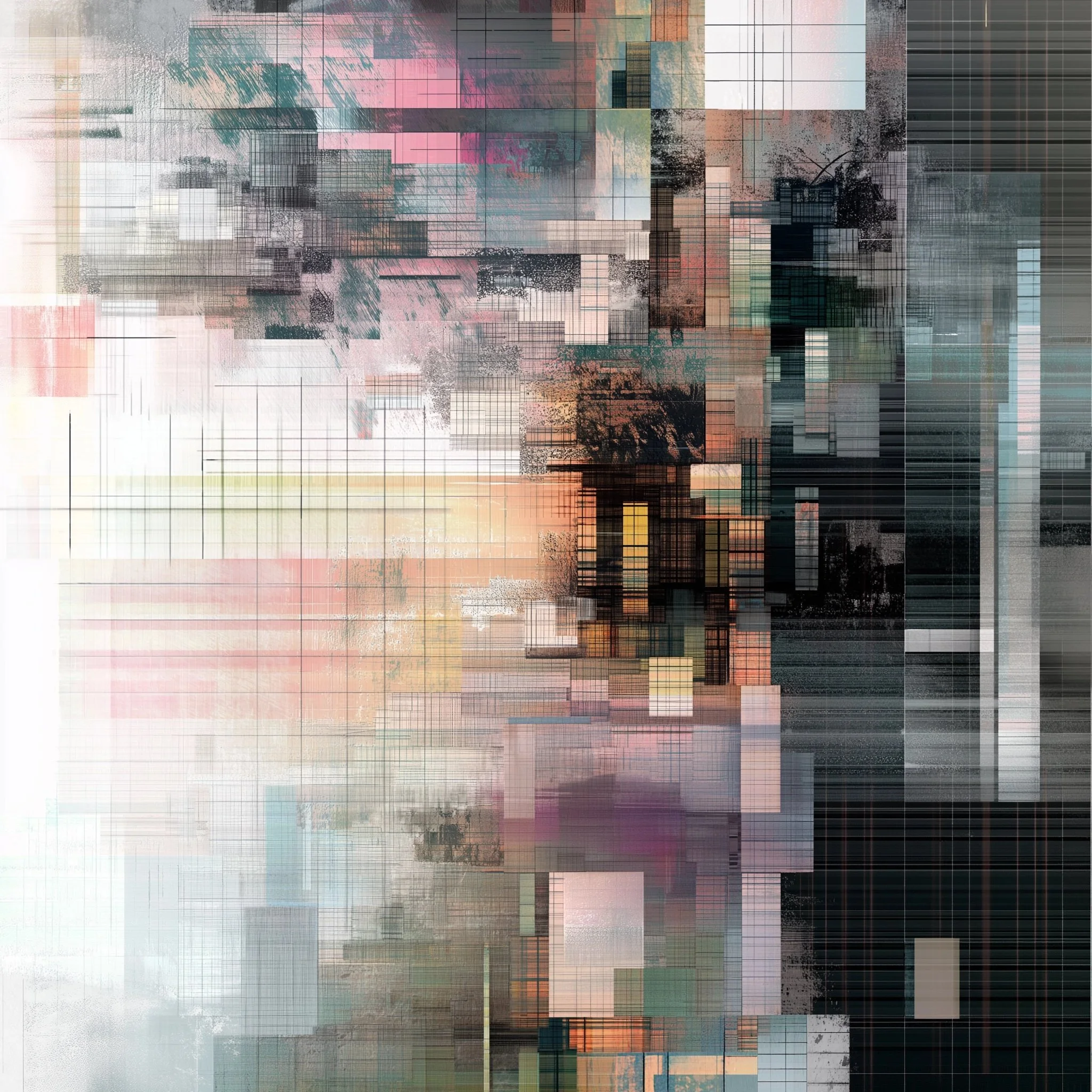
LA.TE4.KID.D7 - Fractured Thresholds: The Geometry of Renal Decline
This abstract artwork unfolds as a suspended threshold, where veils of colour drift like breath across a geometric scaffolding of mirrored forms. Expansive fields hover in solemn gradients—deep maroon dissolving into ashen lavender—evoking both the suffocating hypoxia of COVID-19 and the emotional fatigue of critical care. These tonal atmospheres are punctuated by crystalline tessellations, their precise repetition suggesting diagnostic architecture strained under systemic uncertainty. Light fractures gently through these mirrored nodes, reflecting the early glimmers of biomarker promise against the backdrop of clinical opacity.
Within this space, symmetry becomes both metaphor and mechanism: it alludes to the fragile equilibrium between pre-existing vulnerabilities—diabetes, hypertension—and the inflammatory chaos of cytokine storms. The geometry maps the pathophysiology of AKI, where viral intrusion carves unseen damage long before traditional tools can reveal it. The layering of form and space mimics delayed diagnosis, with structures partially obscured, half-emerging through colour’s haze.
Together, these visual elements manifest as both a caution and a call—a tension between what medicine can measure and what it must still anticipate. This piece does not resolve; it hovers, like a patient not yet stabilised, capturing the poetic stillness and urgent ambiguity that define AKI care in the era of COVID-19.
LA_by_Koba
Original artwork by Ross Prior, inspired by and derived from Sabaghian, T., Kharazmi, A.B., Ansari, A., Omidi, F., Kazemi, S.N., Hajikhani, B., Vaziri-Harami, R., Tajbakhsh, A., Omidi, S., Haddadi, S., Shahidi Bonjar, A.H., Nasiri, M.J., & Mirsaeidi, M. (2022). COVID-19 and Acute Kidney Injury: A Systematic Review. Frontiers in Medicine, 9, Article 705908. https://doi.org/10.3389/fmed.2022.705908. This article is licensed under a Creative Commons Attribution 4.0 International License (CC BY 4.0), accessible at https://creativecommons.org/licenses/by/4.0/. All creative elements and visual interpretations are the original work of Ross Prior, reflecting a conceptual reinterpretation of the clinical mechanisms, diagnostic uncertainties, and therapeutic challenges discussed in Sabaghian et al. (2022). The authors and publisher of the original article are not affiliated with or endorsing this artwork.